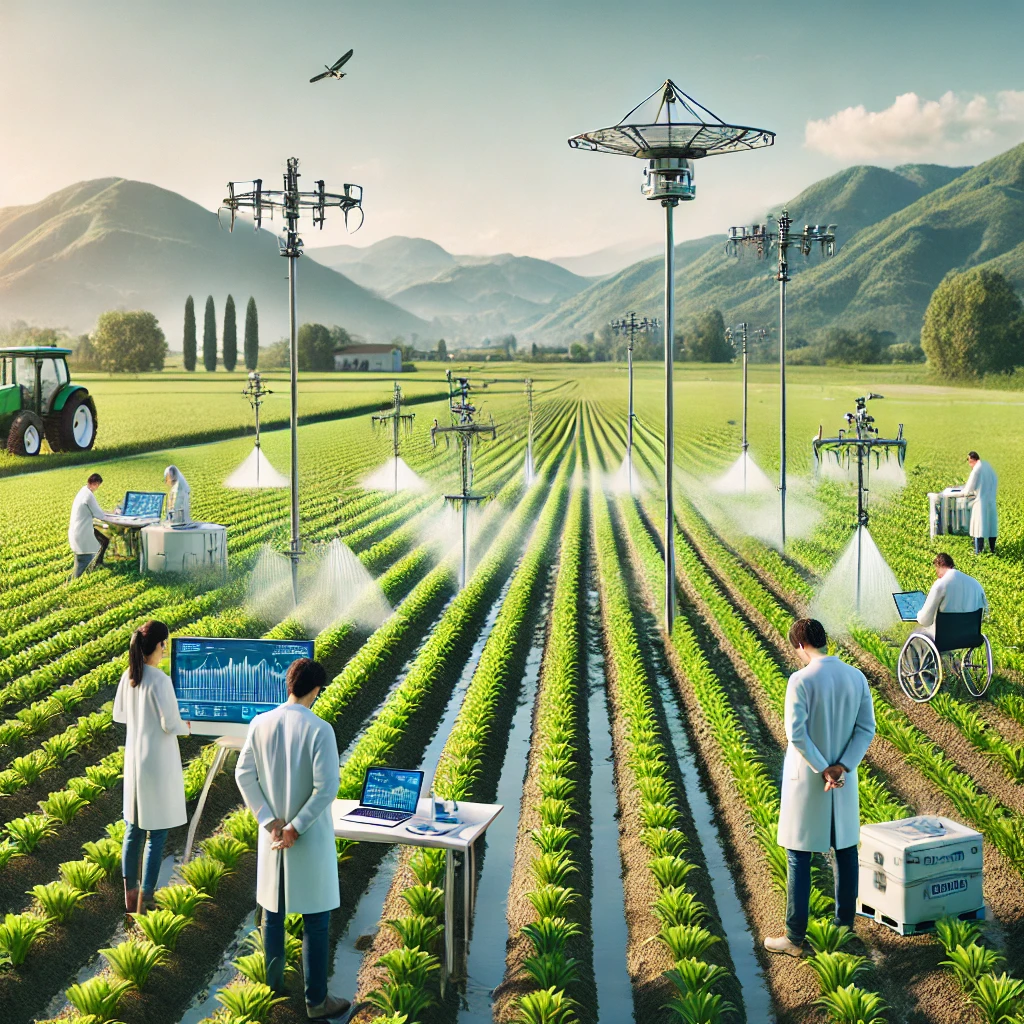
Water-topic living labs are dedicated to developing and testing innovative practices for more efficient water use in agriculture, addressing the global challenge of increasing food production sustainably. In collaboration with Lighthouse Farms, technologically advanced farms in the region, water-topic living labs explore solutions to balance the need to sustain agricultural yields with the sustainable use of water resources. Key initiatives in the project include:
Advanced irrigation technologies and decision support systems: Various types of irrigation systems (sprinkler, surface flooding, micro-irrigation) are tested, and apps for optimal irrigation management are developed, along with support platforms based on satellite data.
Improving soil water retention capacity: The use of cover crops and organic fertilization is experimented with to increase soil organic matter and improve water-holding capacity.
Selection of drought- and marginal-water-resistant crops: For example, drought-tolerant maize hybrids and quinoa cultivation are studied for salt-affected soils, especially in coastal areas of Veneto.
Optimization of weed control techniques: Aimed at reducing herbicide use, these techniques help to minimize water consumption and protect groundwater reserves.
The living lab represents a collaborative model that engages researchers, farmers, and various stakeholders, aiming to combine innovation and sustainability for more efficient and responsible water management in agriculture.